Tao Te Ching Chinese English Parallel Text | Bilingual Edition|Tao Te Ching – Dao Jing, Chapter 2
Tao Te Ching – Chapter 2 《道德经》第二章 原文 (Classical Chinese):天下皆知美之为美,斯恶已;皆知善之为善,斯不善已。故有无相生,难易相成,长短相形,高下相倾,音声相和,前后相随,恒也。是以圣人处无为之事,行不言之教,万物作焉而不辞,生而不有,为而不恃,功成而弗居。夫唯弗居,是以不去。 English Translation:When everyone knows beauty as beauty, the idea of ugliness appears.When everyone knows good as good, the concept of not-good arises. Thus, being and non-being give birth to one another.Difficulty and ease complete each other.Long and short are defined by comparison.High and low depend…
Tao Te Ching – Chapter 2 《道德经》第二章
原文 (Classical Chinese):
天下皆知美之为美,斯恶已;皆知善之为善,斯不善已。
故有无相生,难易相成,长短相形,高下相倾,音声相和,前后相随,恒也。
是以圣人处无为之事,行不言之教,万物作焉而不辞,生而不有,为而不恃,功成而弗居。
夫唯弗居,是以不去。
English Translation:
When everyone knows beauty as beauty, the idea of ugliness appears.
When everyone knows good as good, the concept of not-good arises.
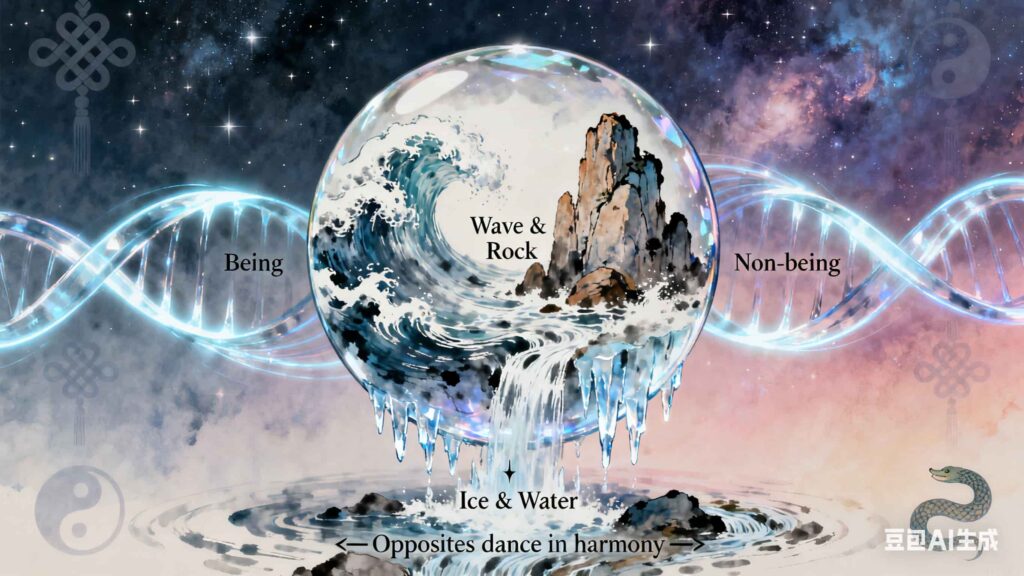
Thus, being and non-being give birth to one another.
Difficulty and ease complete each other.
Long and short are defined by comparison.
High and low depend on each other.
Sound and tone harmonize together.
Before and after follow one another.
This is the constant law of nature.
Therefore, the Sage follows the way of wu wei (non-action).
He teaches without words.
All things flourish without interference.
He creates without possessing.
He acts without attachment.
He achieves without claiming credit.
Because he does not cling to his merits,
his achievements never fade.
白话文解释 (Modern Chinese Explanation):
天下人都知道美之所以为美,丑的观念就产生了;都知道善之所以为善,不善的观念就产生了。
所以有和无相互生成,难和易相互成就,长和短相互比较,高和下相互依存,音和声相互和谐,前和后相互跟随,这是永恒的规律。
因此,圣人以“无为”的态度行事,以“不言”的方式教化,让万物自然生长而不加干涉,生养万物而不占有,有所作为而不自恃,功成而不居功。正因为不居功,所以功绩不会消失。
Plain English Commentary:
When people define beauty, ugliness appears. When good is named, not-good comes into being. Opposites create each other: being and non-being, difficult and easy, long and short, high and low, sound and silence, before and after. This interdependence reflects the eternal balance of the Tao.
The Sage follows wu wei—acting in harmony with nature. He teaches without speaking, nurtures life without controlling, and accomplishes without attachment. By not claiming credit, his influence endures and never disappears.